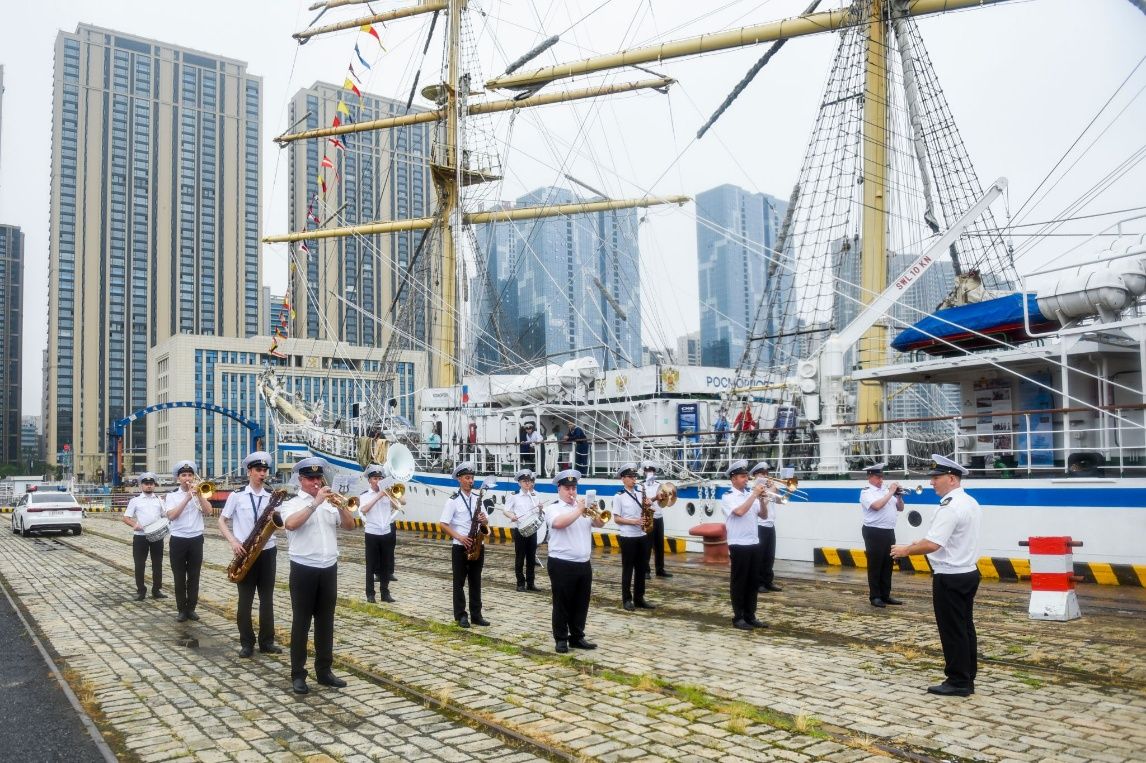
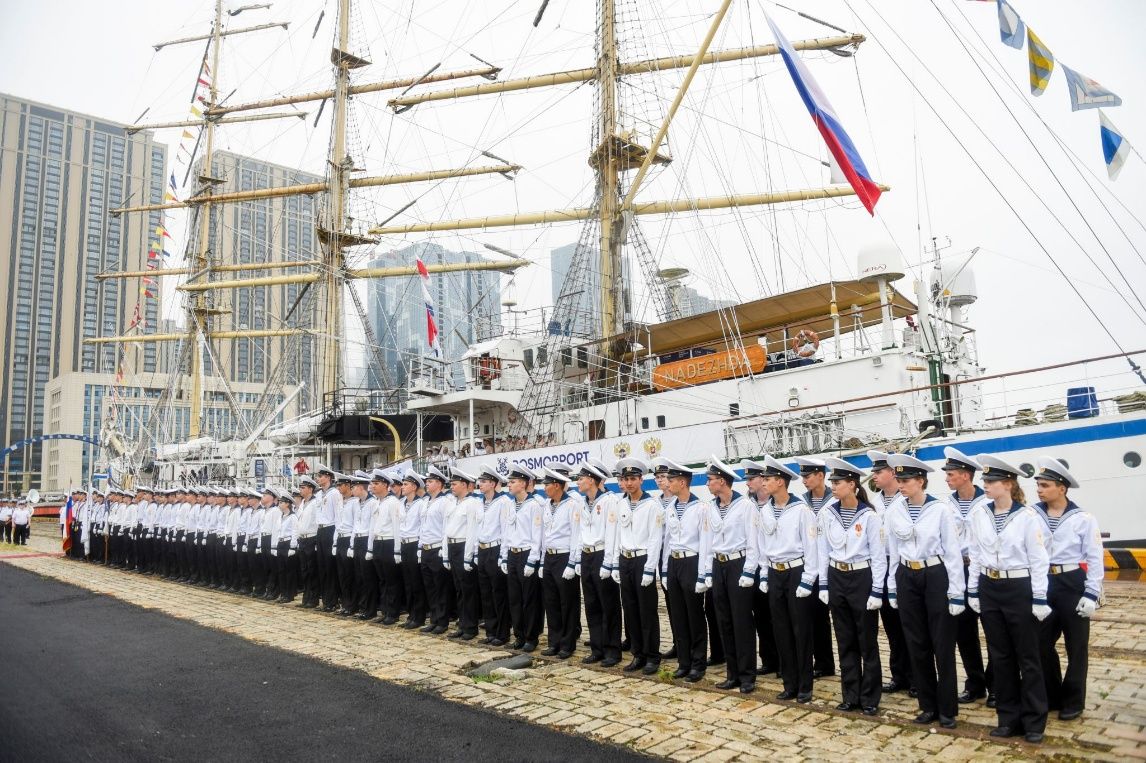
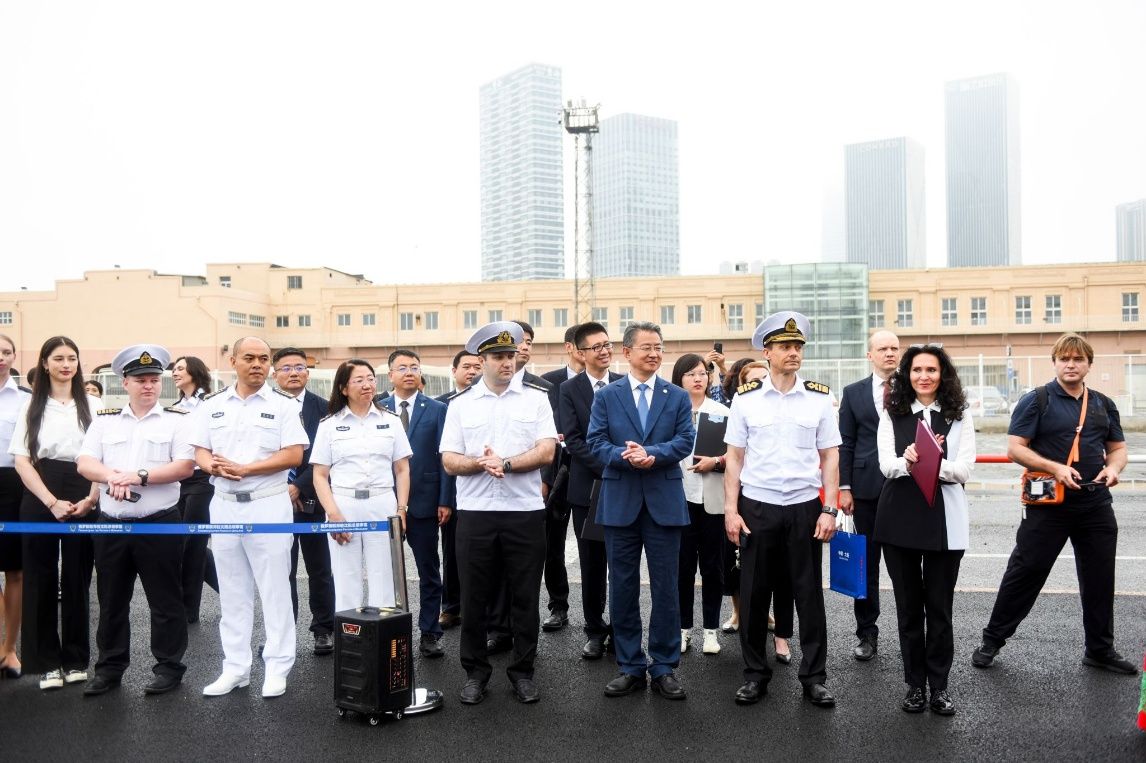
On the occasion of the 22nd China Maritime Day, which falls on July 11, and against the backdrop of the 30th anniversary of the China-Russia Strategic Partnership of Coordination, the 25th anniversary of the signing of the Sino-Russian Treaty of Good-Neighborliness and Friendly Cooperation, the inaugural year of the 2026–2027 “China-Russia Years of Education,” and the 20th anniversary of the establishment of cooperative relations between the two universities, at the invitation of our university, the training ship Nadezhda of Admiral Nevelskoy Maritime State University (MSU) arrived in Dalian. Nearly 200 faculty and student representatives officially began a four-day visit. The event was attended by Natalia Pryzhkova, Consul General of the Russian Federation in Shenyang; Deputy Consul General Aleksandr Smirnov; other members of the Consulate General; the faculty-student delegation from MSU; and university leaders along with relevant officials from DMU.
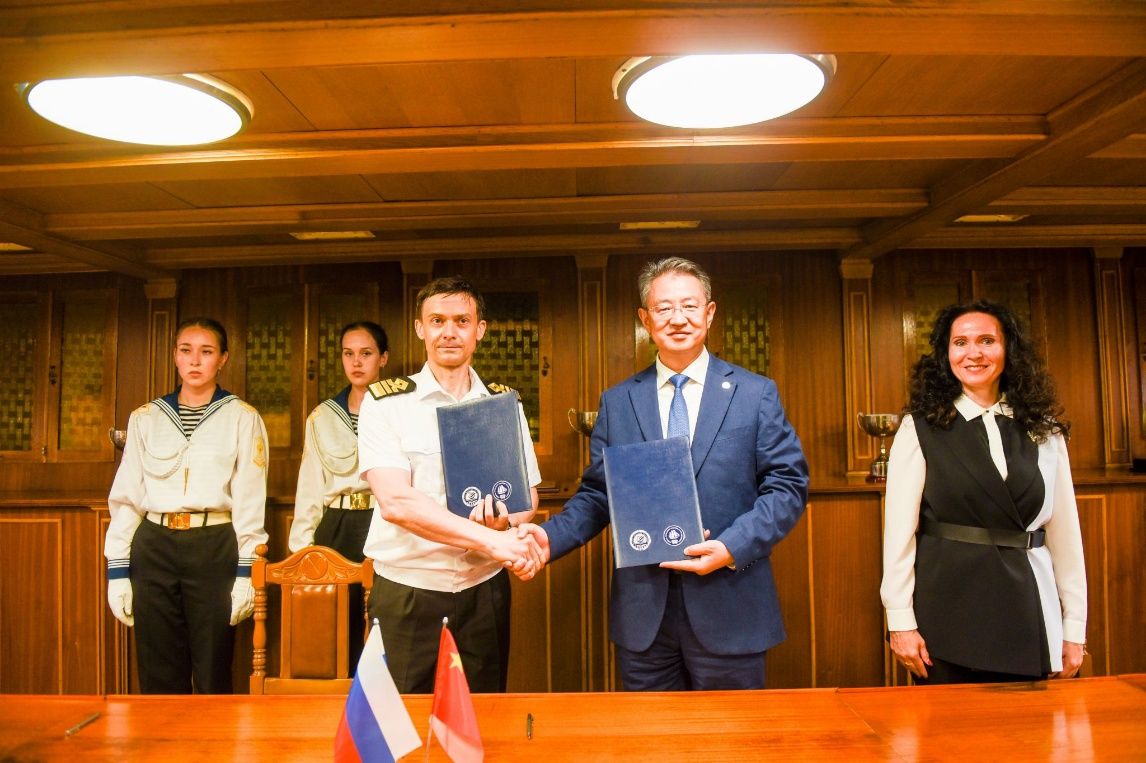
On the morning of July 9, President Shan Hongjun of DMU and Rector Denis Burov of MSU signed a new Memorandum of Understanding (MoU) aboard the training ship Nadezhda. The two universities will focus on navigation in polar waters and talent cultivation to further deepen their cooperation.
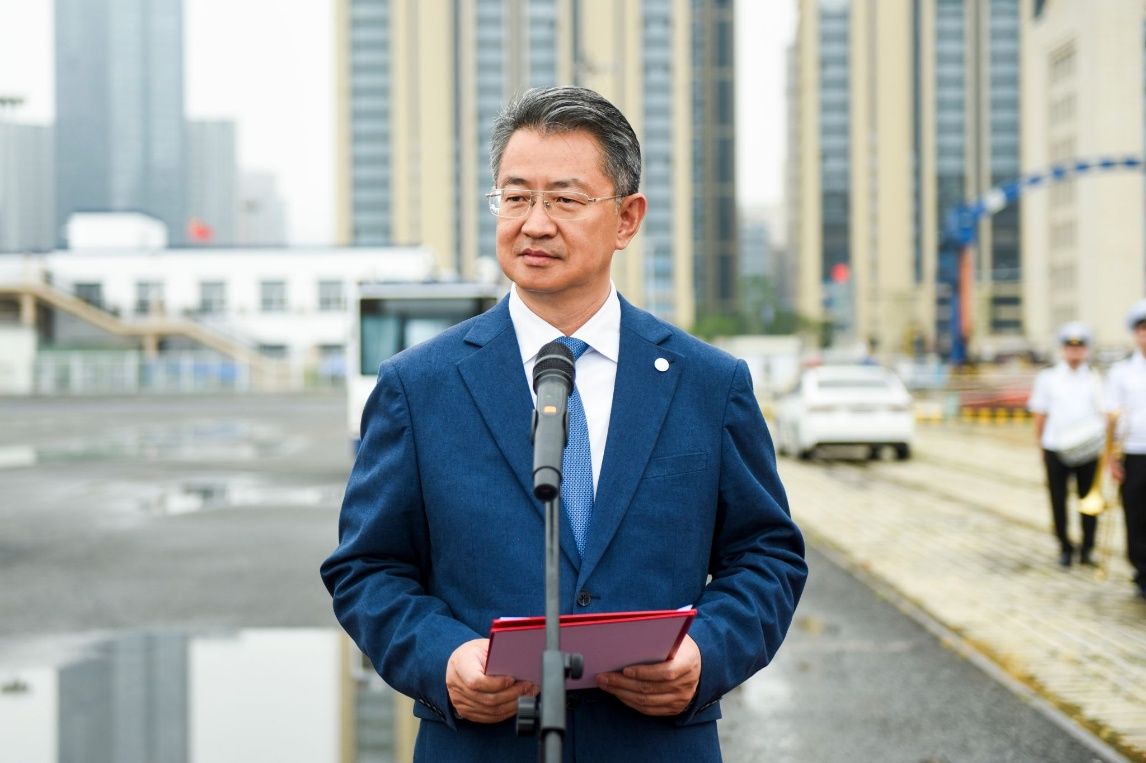
At the signing ceremony, President Shan Hongjun noted that since the establishment of their cooperative relationship in 2006, DMU and MSU have developed profound friendship and built a solid foundation for collaboration. He emphasized that this signing is yet another milestone in deepening cooperation between the two institutions and a cornerstone for both sides to embrace the new era and empower new development. He expressed the hope that the two universities would take this new MoU as an opportunity to renew their deep friendship, strengthen practical collaboration, intensify joint talent cultivation, reinforce research synergy, and broaden the dimensions of exchanges, so as to promote resource complementarity and the integration of strengths between the two institutions.
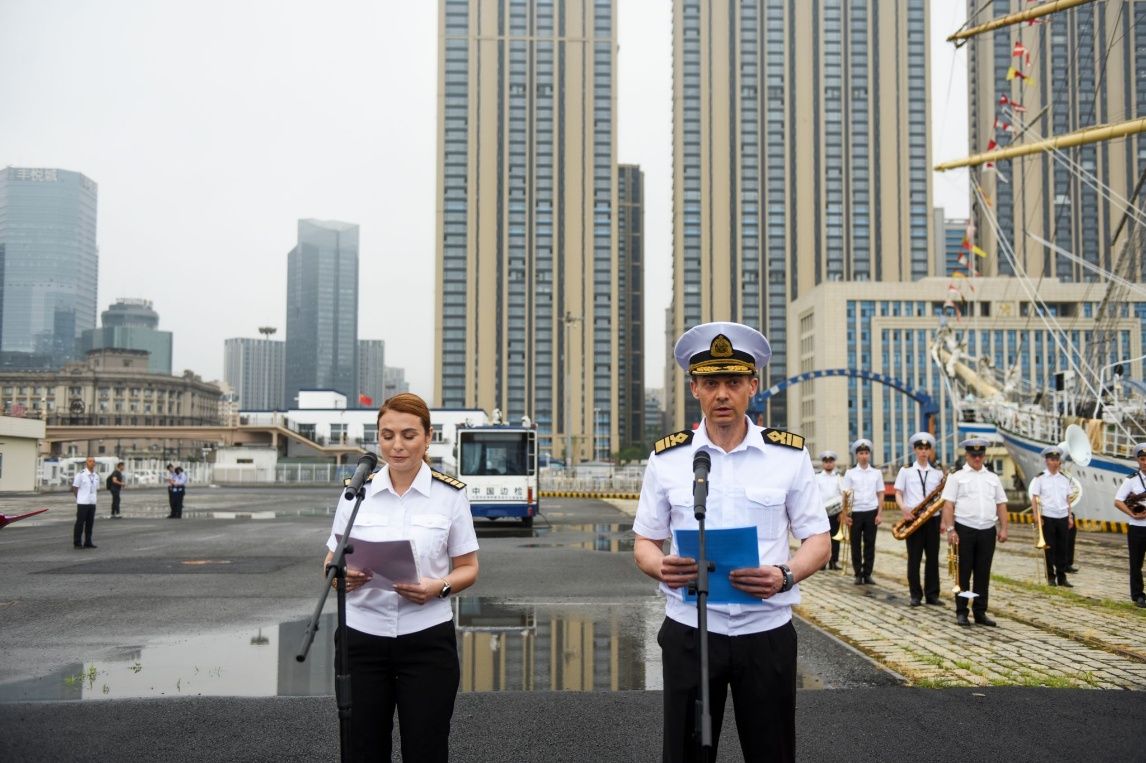
Rector Denis Burov stated that the name of the training ship Nadezhda (Hope) embodies MSU’s sincere aspiration to deepen pragmatic cooperation and pursue win-win outcomes together with DMU. He expressed firm belief that this visit will lay a solid foundation for deeper collaboration in science, education and youth exchanges between the two universities, and serve as a brand-new starting point for the implementation of all cooperation plans of both sides.

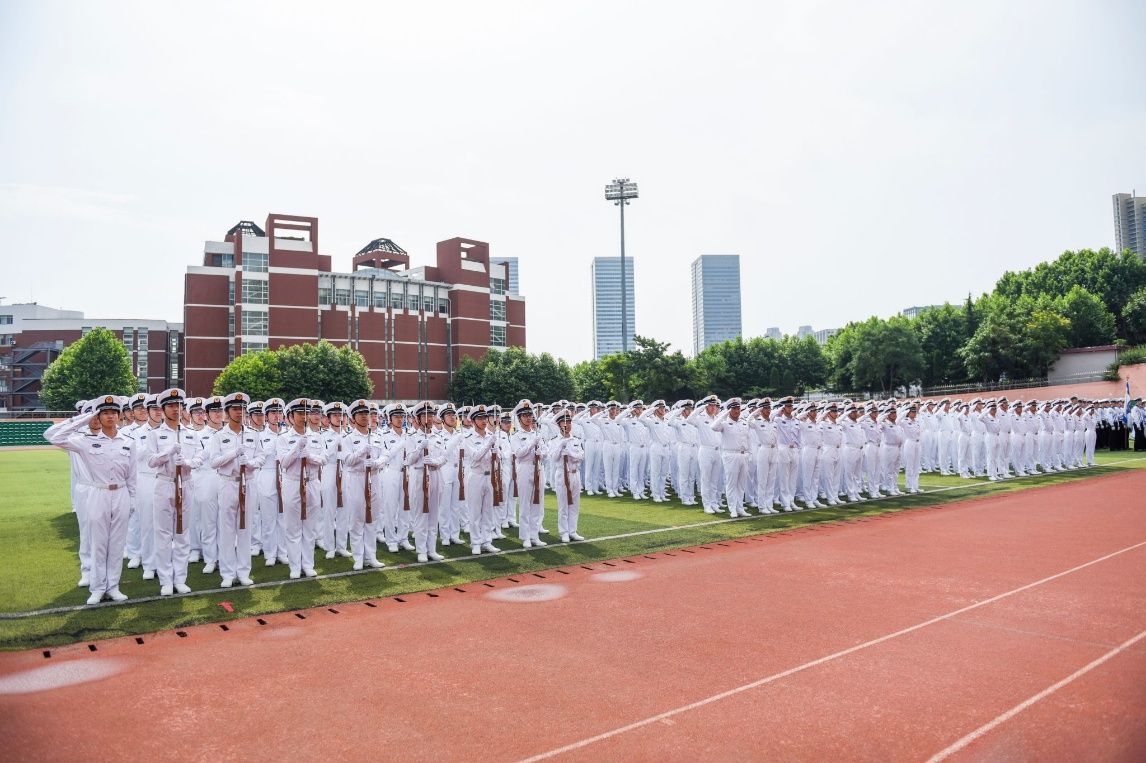
On the morning of July 10, the welcome ceremony and formation display were held at Xishan Stadium.
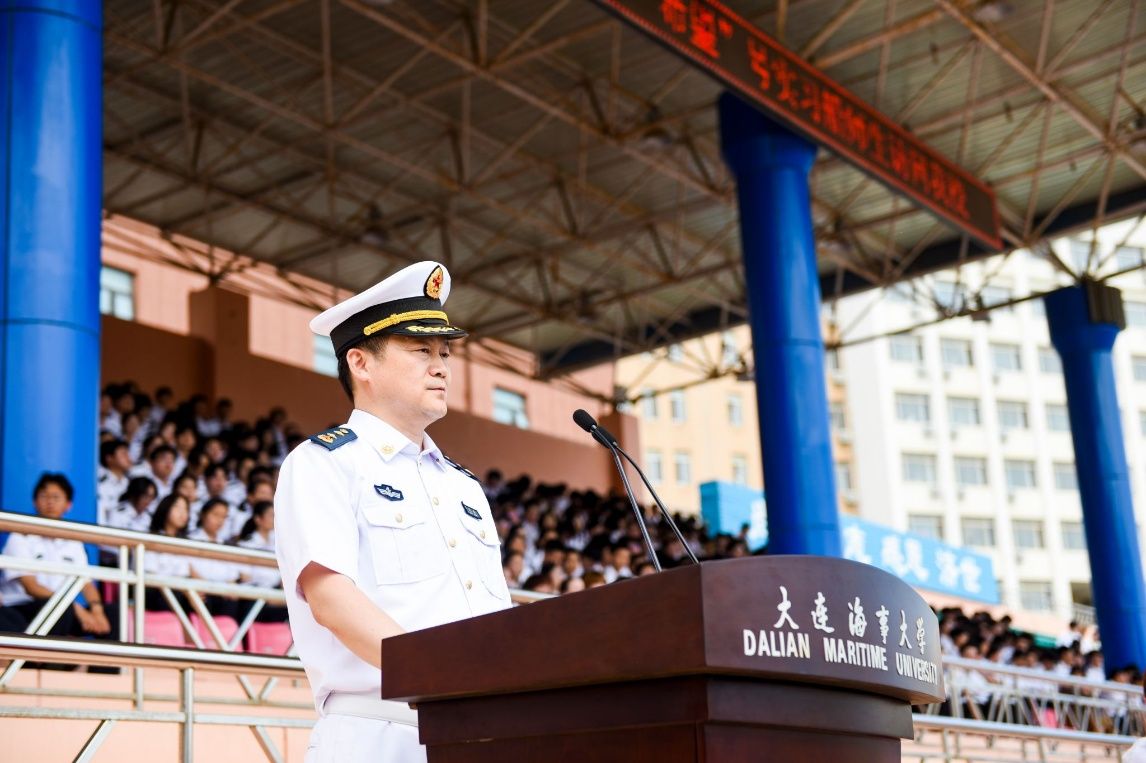
On behalf of DMU, Vice President Zeng Qingcheng extended a warm welcome to the faculty-student delegation from MSU who traveled a long way to visit. He remarked that young people are a new vital force for polar exploration and marine development, as well as successors to China-Russia friendly maritime cooperation. This visit has built a comprehensive platform for young maritime talents from both countries to know, understand and integrate with one another. He hoped that teachers and students of the two universities would cherish this rare opportunity to draw professional strengths from each other, jointly explore new marine knowledge, and forge profound friendship.
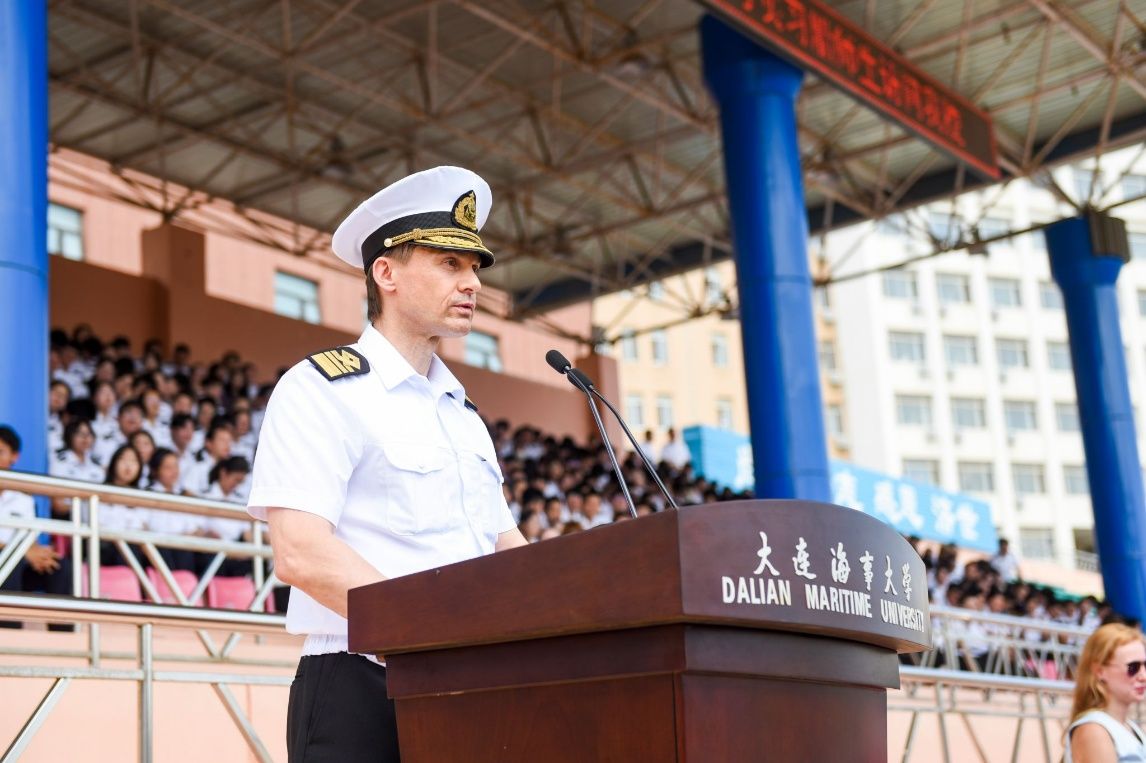
Rector Denis Burov expressed his gratitude for the warm reception extended by DMU. He pointed out that this visit officially opens a brand-new chapter in youth, cultural and educational exchanges between Russia and China. He noted that students from both universities are core talents of the global maritime industry, working in diverse fields including shipping, ports, logistics and interdisciplinary marine research. He hoped that young people of the two institutions would grow into key forces driving technological innovation and national economic prosperity, and build a bridge of good neighborliness and harmonious coexistence between Russia and China.
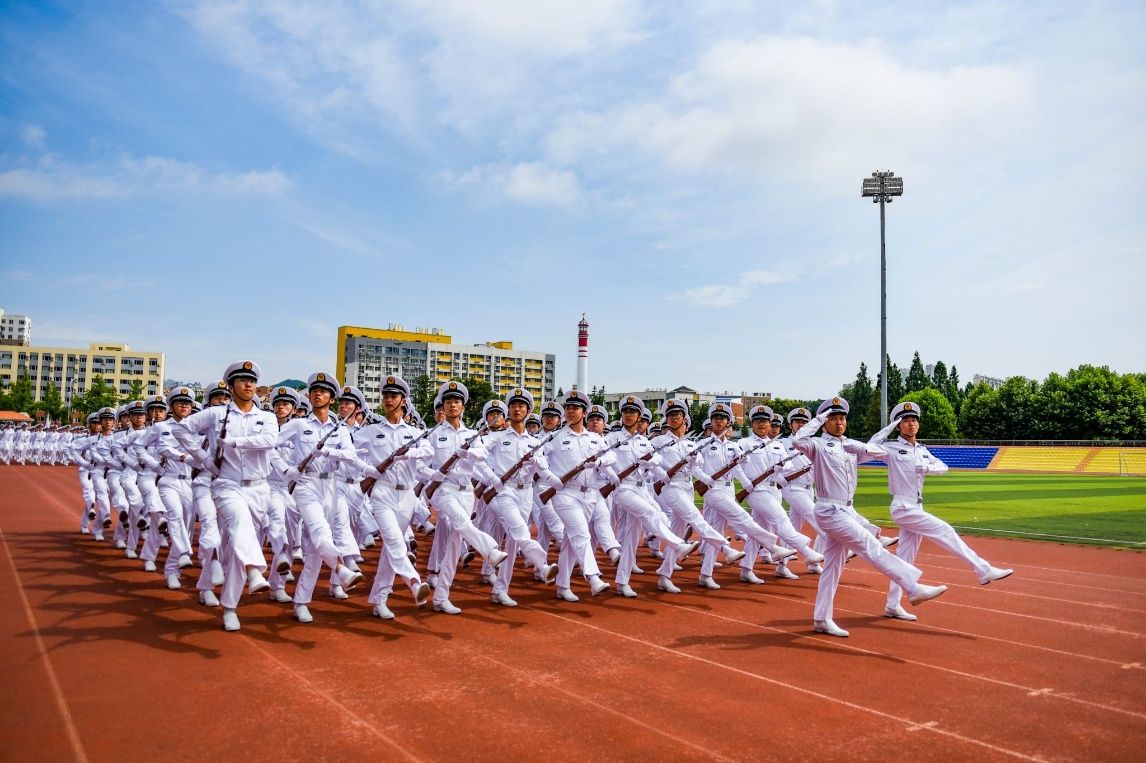
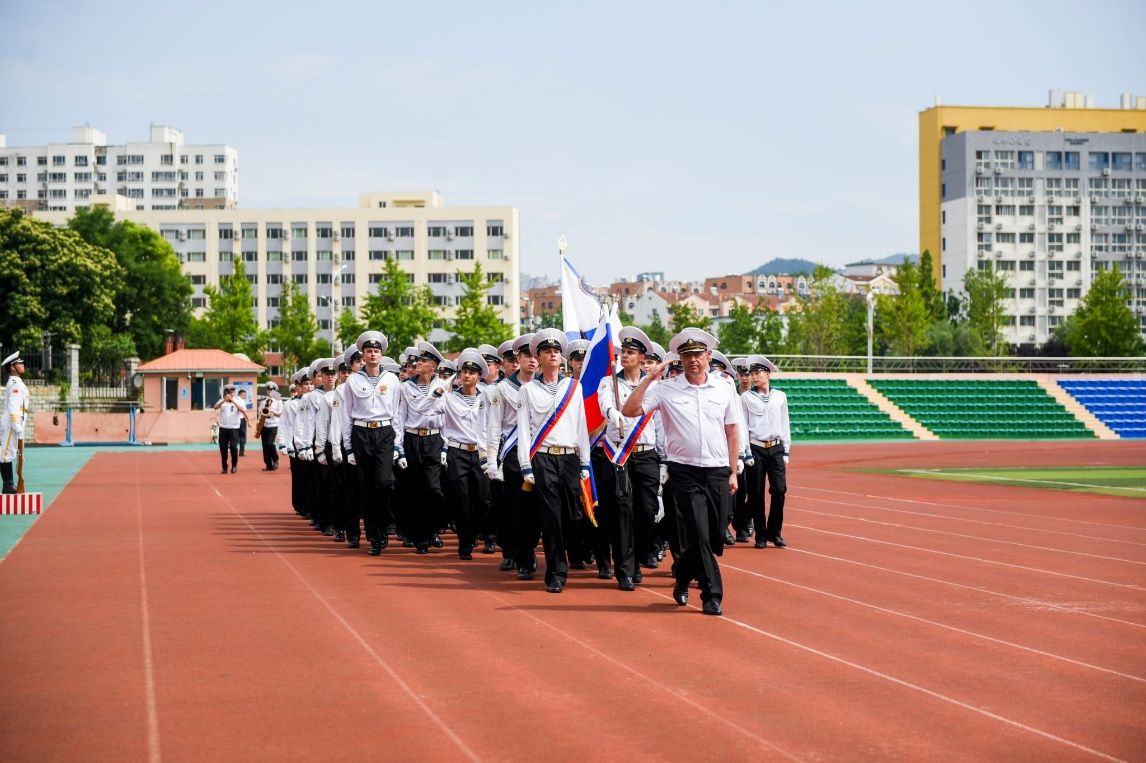
During the event, student formations of the Navigation College, Marine Engineering College and Marine Electrical Engineering College of DMU, together with the student formation of the Russian side, marched with upright bearing and forceful strides, showcasing the uplifting mental outlook of young maritime talents of China and Russia.
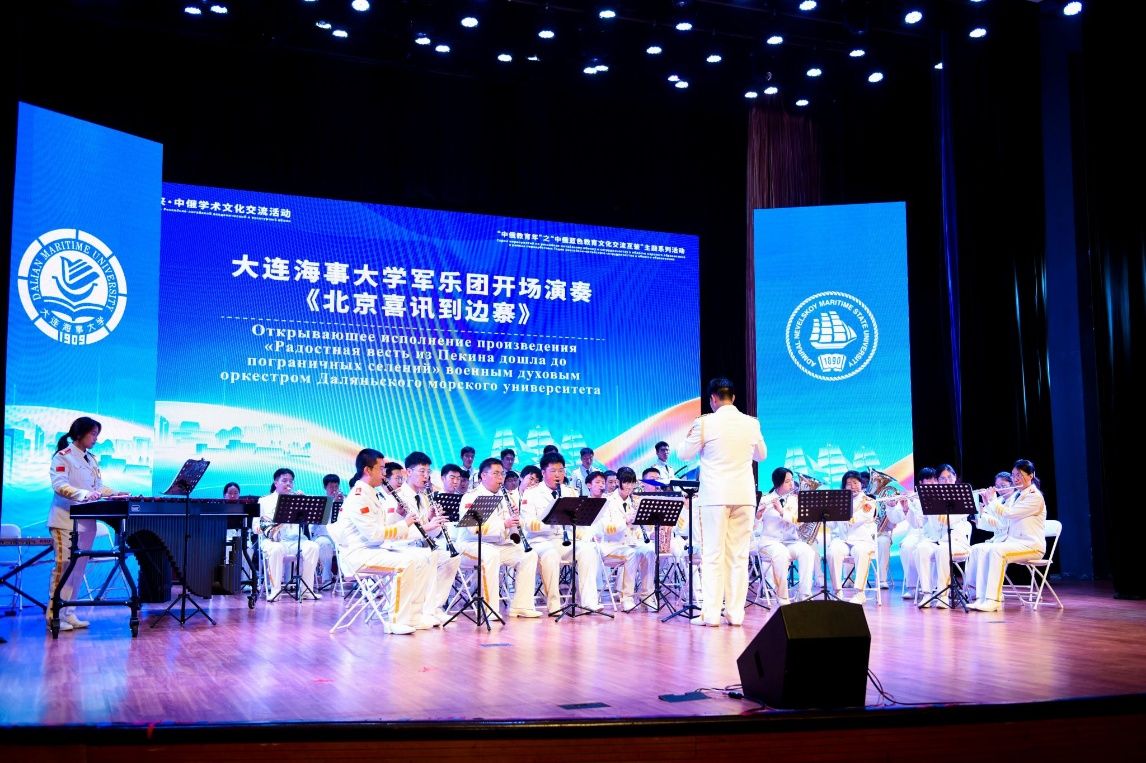
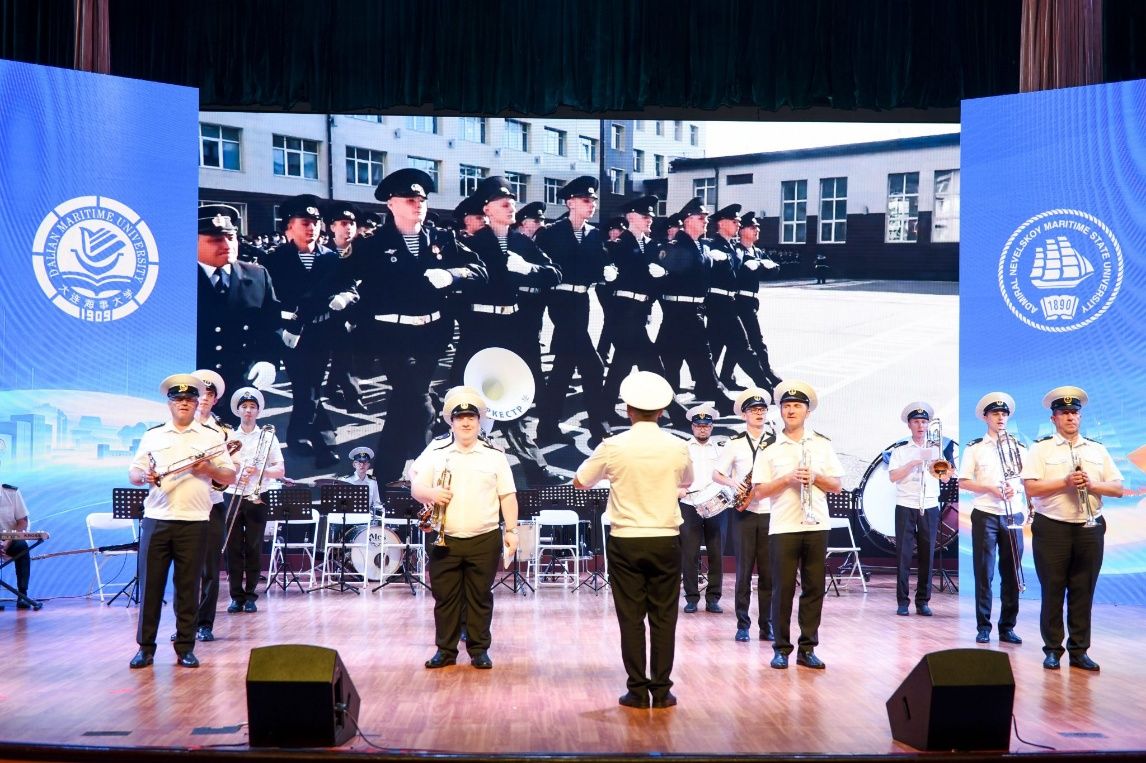
In the afternoon of July 10, the academic and cultural exchange event themed the Arctic Future: China-Russia Academic and Cultural Exchange was held at the multi-function hall of the new student activity center of the university. The performance of Good News from Beijing Reaches the Border Villages by the military band of DMU and an opening overture played by the Russian band kicked off the event.
In the address, Zeng Qingcheng noted that the global maritime landscape is undergoing profound changes, and the polar regions have become a crucial strategic frontier for global shipping innovation, ocean governance, and international cooperation. As neighbors with close geographical ties to the Arctic, China and Russia share broad consensus and ample space for collaboration, making them key contributors to the sustainable development of the Arctic. He pointed out that serving polar development and empowering a sustainable blue future is one of the core missions of maritime higher education in the new era. He expressed his expectation that the two universities would join hands, proactively embrace new opportunities in Arctic development, and deepen cooperation and exchanges in the polar domain.
Rector Denis Burov stated that against the backdrop of profound global transformations, the development of new transport corridors and modern logistics systems in Northeast Asia is of great significance. China’s Belt and Road Initiative, together with Russia’s national strategy for Arctic development—the Northern Sea Route and the trans-Arctic transport corridor—constitutes the core support of modern international logistics. He noted that today’s academic exchanges would chart a clear course for future collaboration between the two universities, ensuring steady and fruitful progress in their partnership.
During the academic exchange session, Han Jialin, faculty representative of DMU, and Ruslan Vitalievich Gulidov, faculty representative of MSU, delivered keynote speeches respectively, while student representatives Tang Yuting and Ivan Melikhov gave academic presentations.
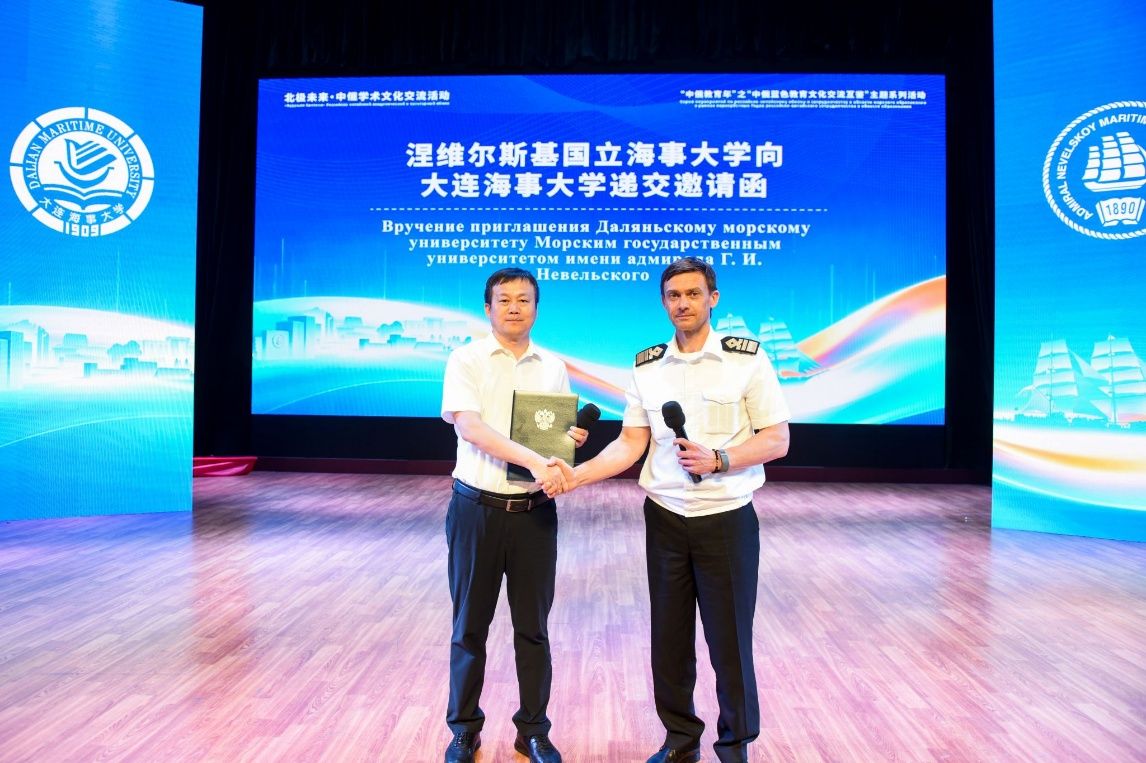
Subsequently, an invitation letter was presented to DMU, formally inviting DMU to pay a visit at an appropriate time next year to further strengthen the friendship between the two institutions.
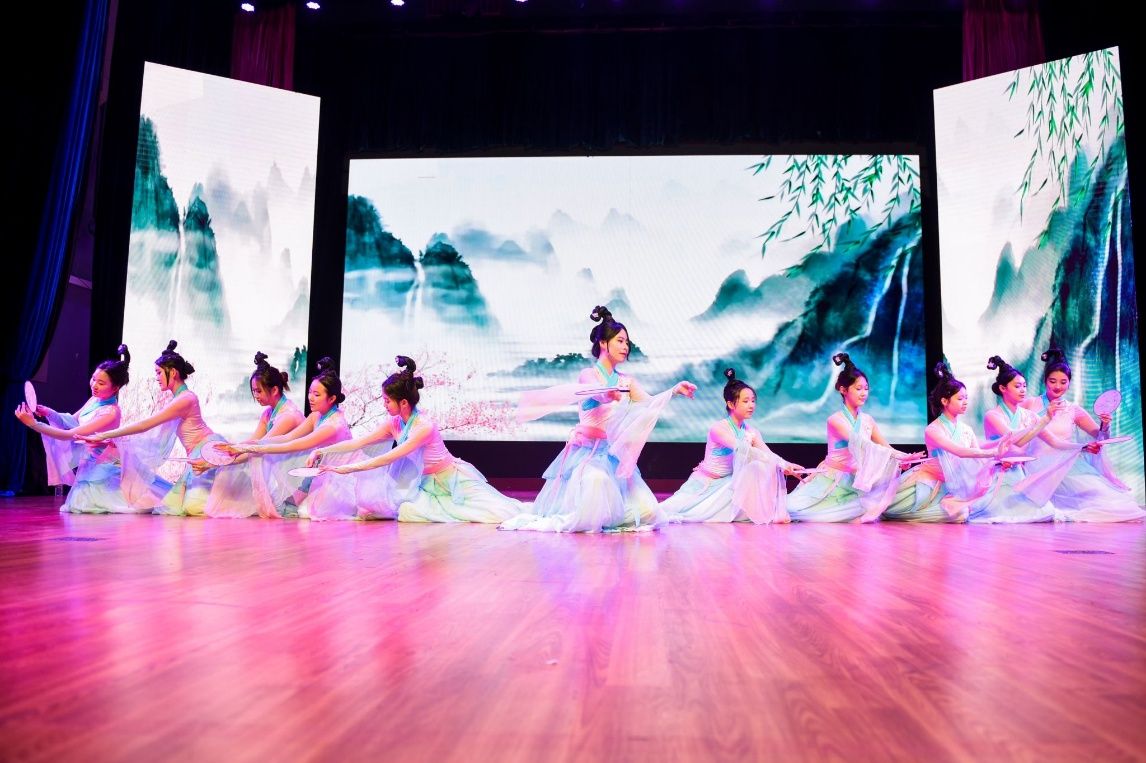

During the cultural exchange segment, DMU students presented an elegant classical dance Beauty in Every Grace and an original dance Chasing the Blue Dream that portrays the spirit of navigation. MSU students delivered a lively creative sailor dance Little Apple and an excerpt from the ballet solo Swan Lake.
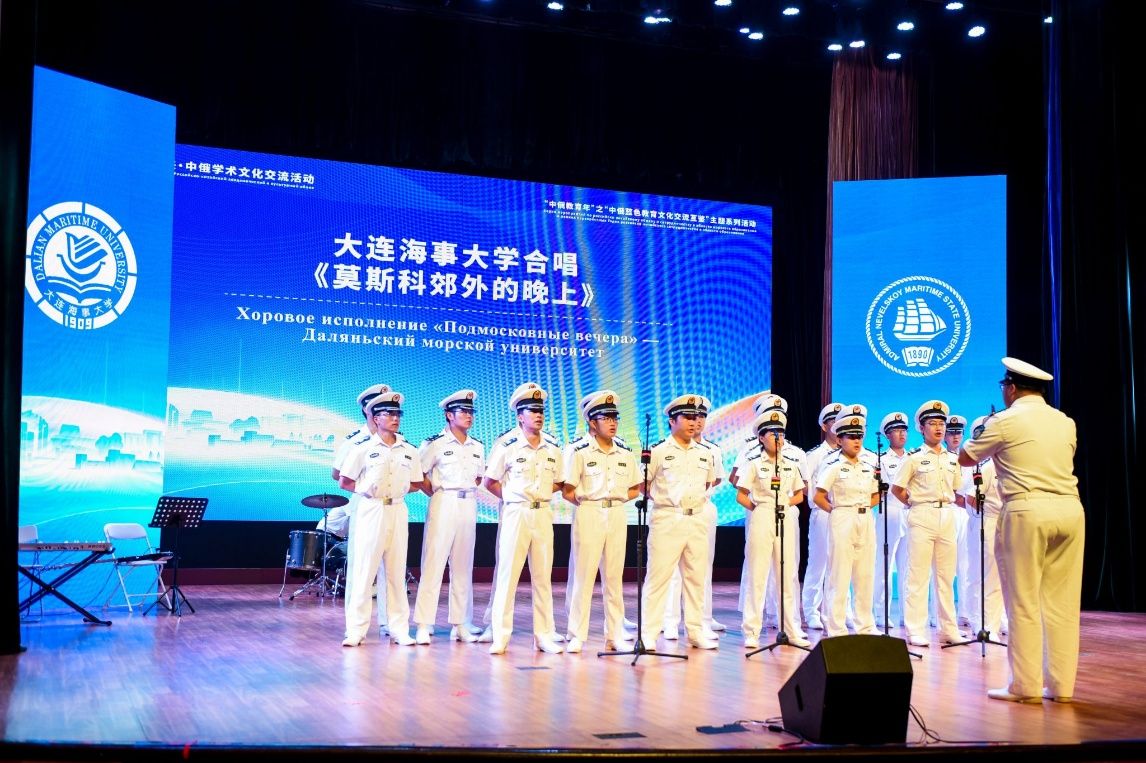
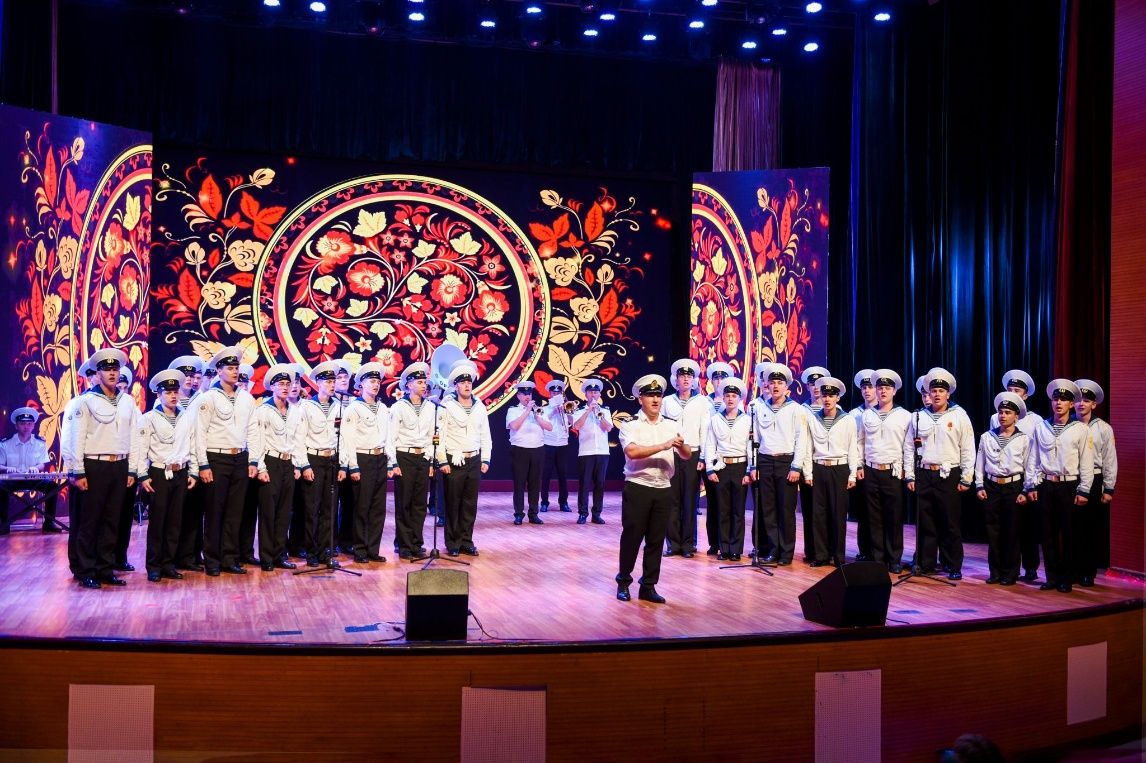
Our students paid tribute to the long-standing friendship between China and Russia with a heartfelt rendition of Moscow Nights. The Russian students, brimming with enthusiasm, sang the classic song Katyusha.
Amid the resounding anthems of both universities, the academic and cultural exchange event drew to a close.
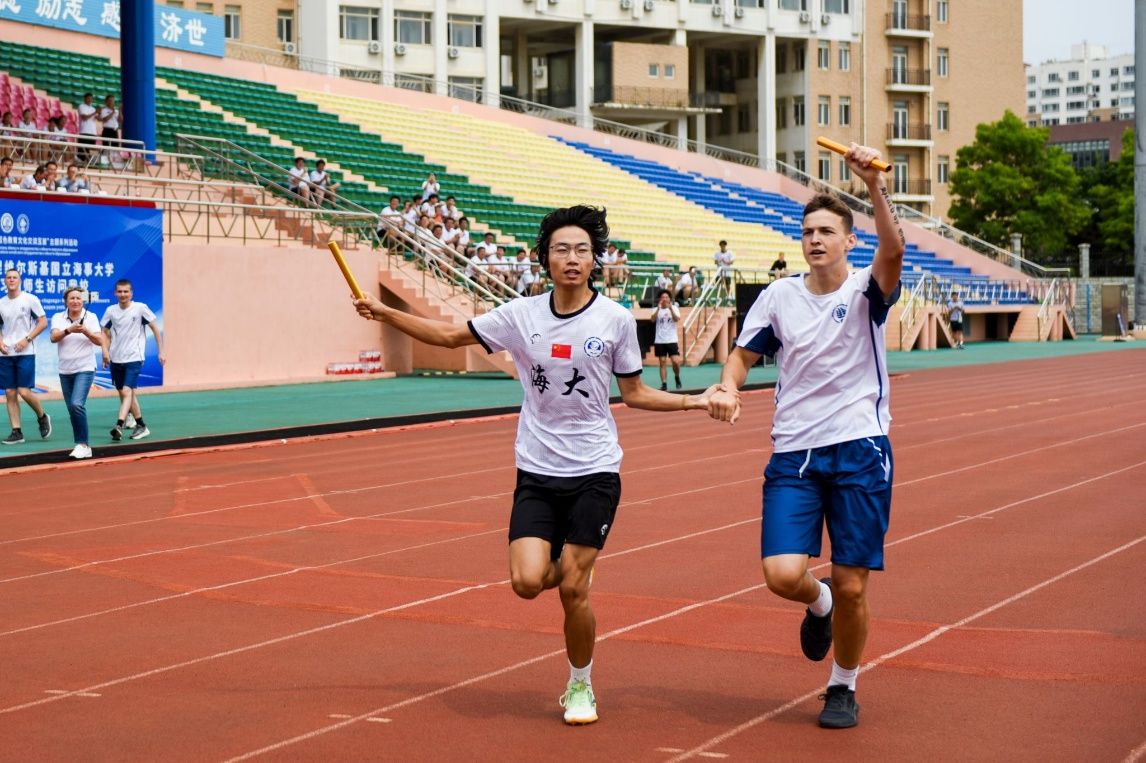

On the morning of July 11, students from the two universities engaged in friendly sporting competitions on the green field. They competed fiercely yet splendidly across six events—the 4×100m relay, 4×400m relay, penalty shootout, basketball shooting contest, cyclone run, and tug-of-war—sweating for their youth and sowing the seeds of friendship.
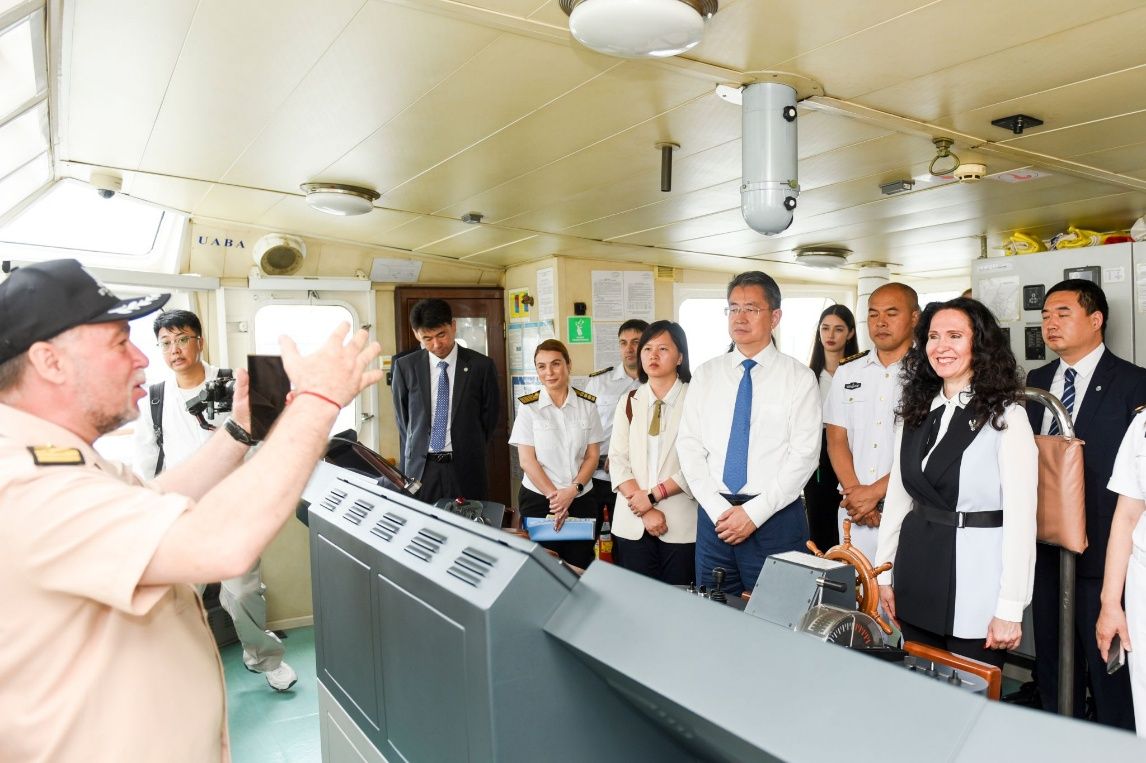
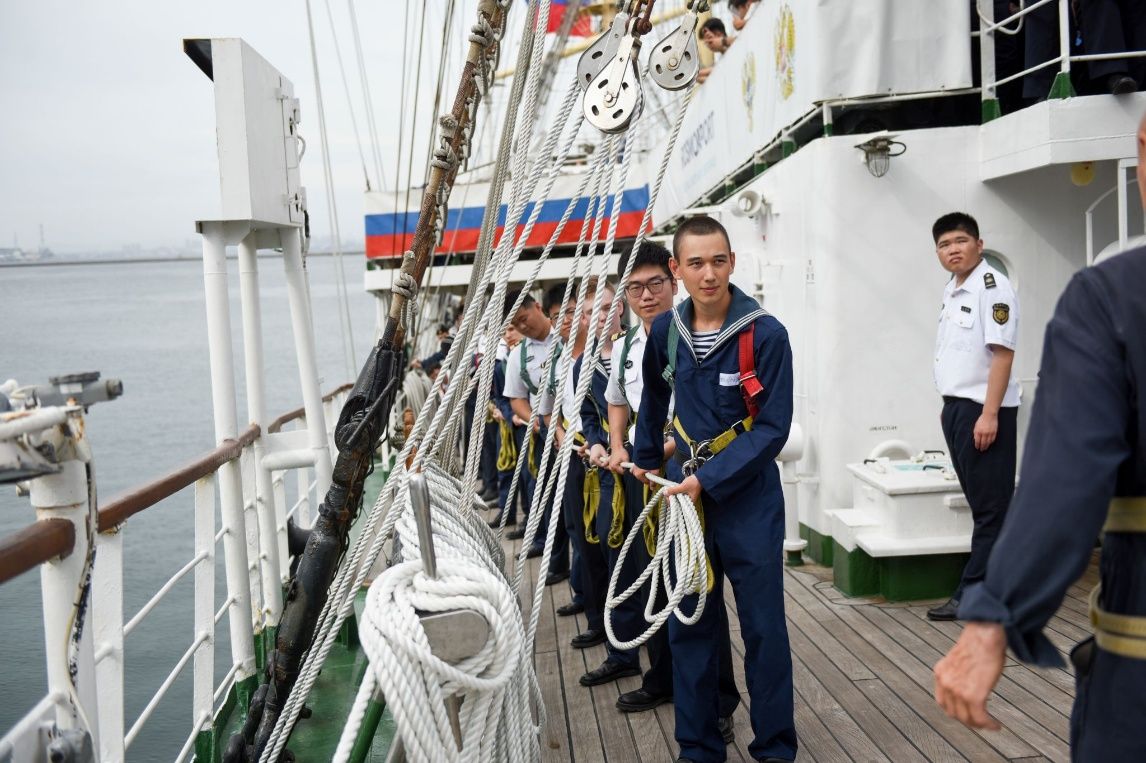
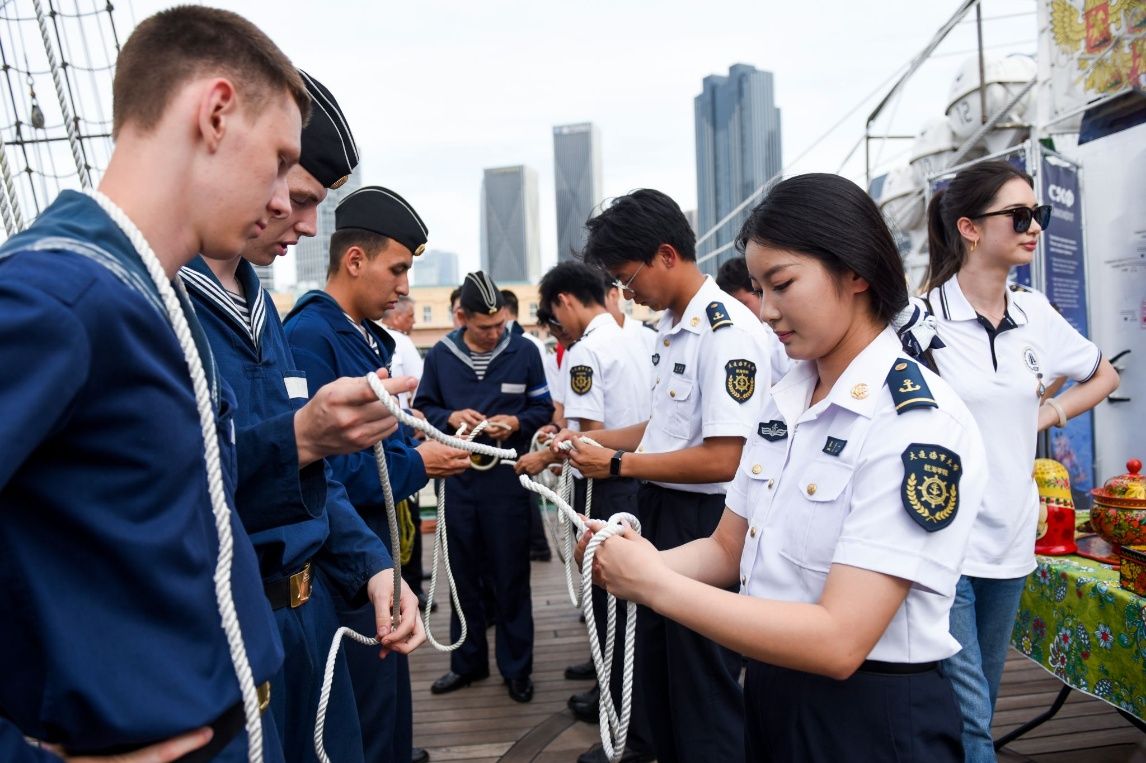
On the morning of July 9 and the afternoon of July 11, at the invitation of MSU, over 90 faculty and student representatives from our university boarded the training ship Nadezhda for in-depth study and exchanges with their Russian counterparts.
The Nadezhda is the only large three-masted sailing training frigate in the Russian Far East. Bearing the profound heritage of Russia’s century-old maritime education, it serves as a “Floating University” for nurturing maritime talent and tempering the original aspirations of seafarers.
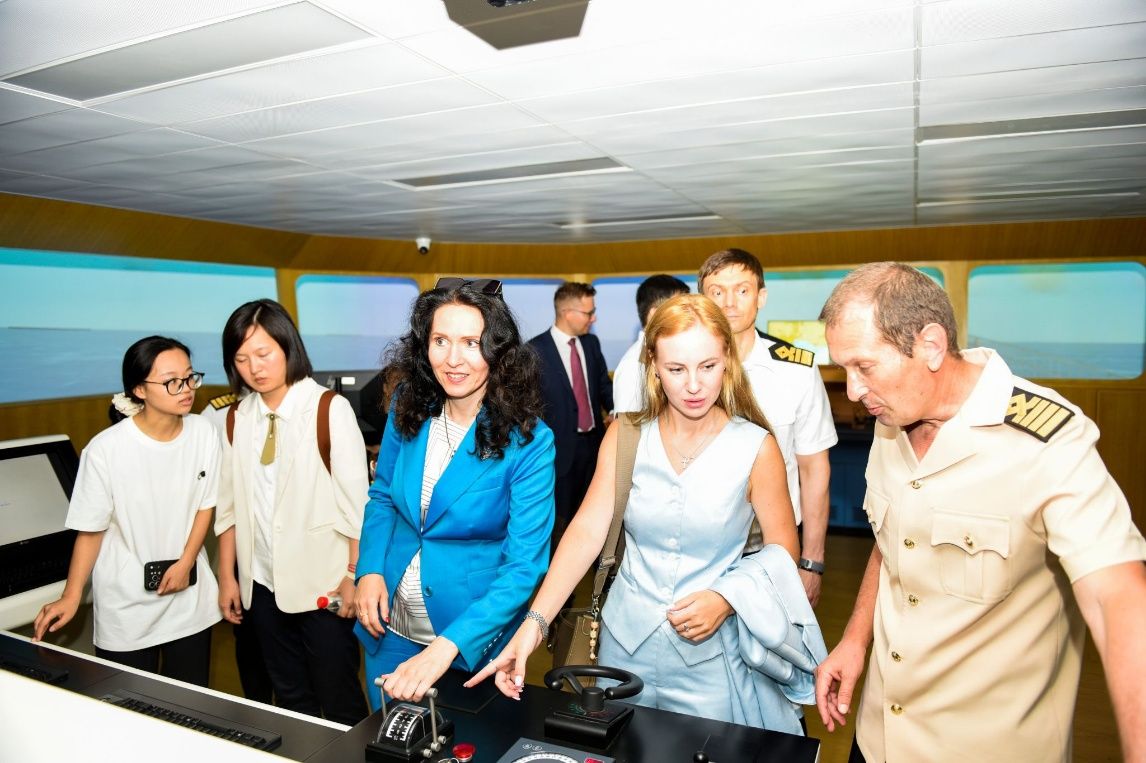
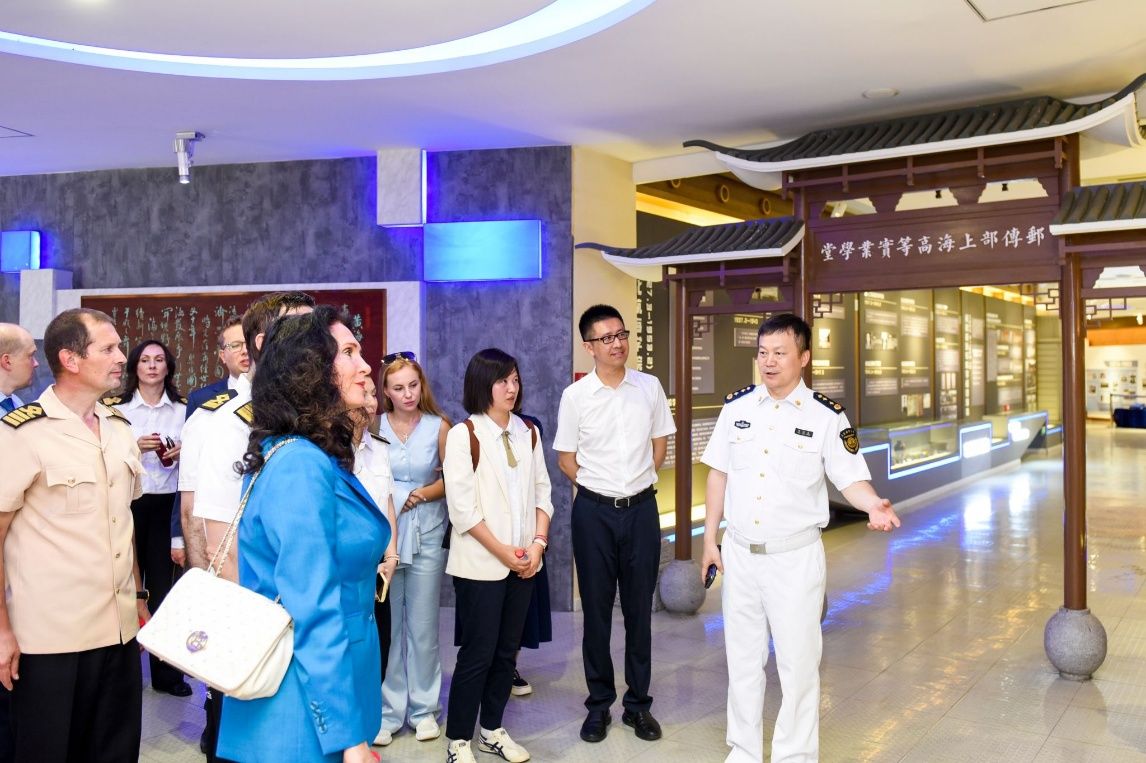
During the visit, the delegation from MSU also toured our Full-Mission Navigation Simulator, Shore-Based Smart Operation & Control Center of Intelligent Ships, National Engineering Research Center of Maritime Navigation System, Maritime Education Museum, New Library, and the Xinhongzhuan training vessel.
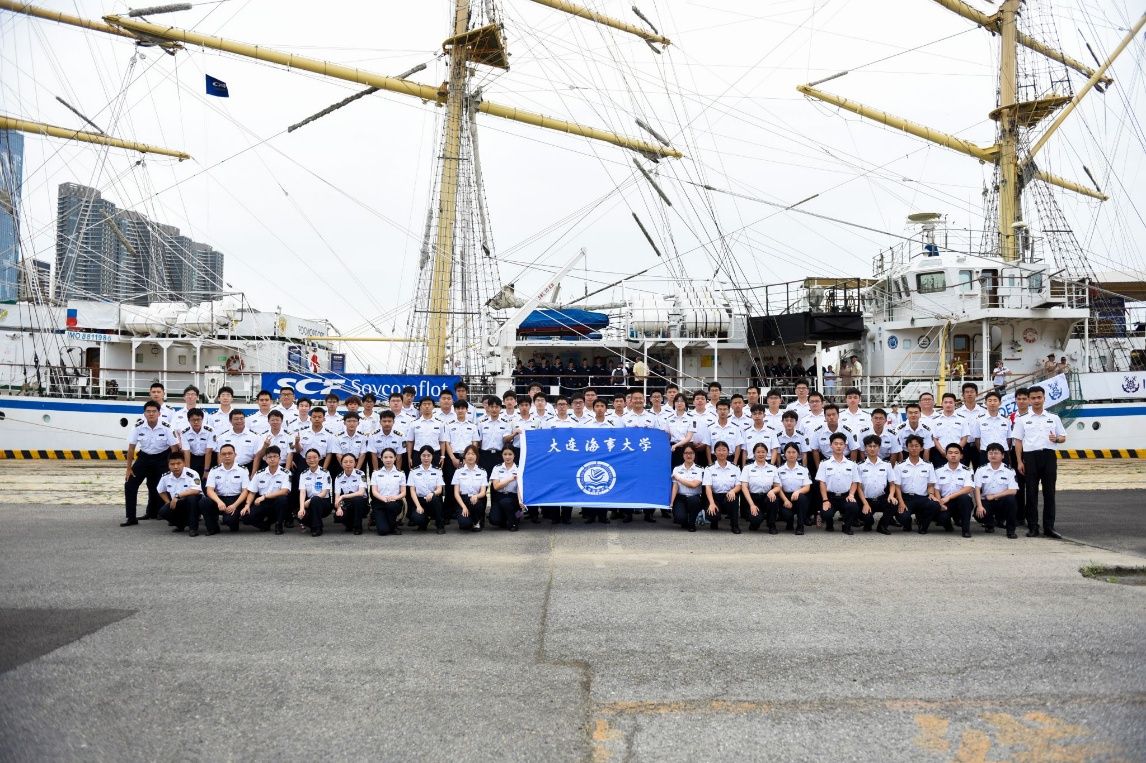
This visit marks a significant and pragmatic step in advancing China-Russia maritime education cooperation to higher quality and standards, adding a rich dimension of international exchange to China’s National Maritime Day.
Moving forward, the two universities will deepen practical collaboration in key areas such as Arctic shipping, green maritime development, and innovation in maritime education. Together, we will cultivate a new generation of maritime professionals with global vision and exceptional competence, jointly safeguard the unimpeded flow of the Maritime Silk Road, bolster the development of the Polar Silk Road, and write a new chapter of mutual learning between Chinese and Russian maritime civilizations and win-win educational cooperation.
 中文
中文


